 08045479576
 08045479576

 Send Inquiry
Polysorbate 20/60/80
Price 140.0 INR/ Kilograms
MOQ : 25 Kilograms, Kilograms
Polysorbate 20/60/80 Specification
- Grade
- pharma grade
- EINECS No
- 618-507-4
- Ph Level
- 6.0 8.0 (1% aqueous solution)
- Moisture (%)
- 1.0% moisture by weight
- Appearance
- Clear to pale yellow viscous liquid
- Assay
- 1.0% (indicates moisture content)
- Shelf Life
- 3 Years
- HS Code
- 3402.19
- Molecular Formula
- C64H124O26
- Storage
- Dry Place
- Water Solubility
- Polysorbate 80 (Tween 80) is highly soluble in water.
- Taste
- Bitter
- Molecular Weight
- 1310 Kilograms (kg)
- Structural Formula
- [Polyoxyethylene chains] -(CH2CH2O)n- | Sorbitan ring O C=O (CH2)7 CH=CH (CH2)7 CH3 (Oleic acid tail)
- Heavy Metal (%)
- NMT 10 ppm
- Loss on Drying
- 1.0% (indicates moisture content)
- Chemical Name
- Polysorbate 80 (often called Tween 80)
- CAS No
- 9005-65-6
- Usage
- Emulsifier, surfactant in pharmaceuticals, cosmetics, food, and industrial products
- Purity(%)
- 99% (typical commercial grade)
- Application
- Polysorbate 60 and 80 are mostly used in food among the category of Polysorbates, but the latter is used more than polysorbate 60 in food. Polysorbate 60 and 80 are the most commonly used in bakery food production. 1. Pharmaceuticals Acts as an emulsifier and solubilizer in oral, topical, and injectable drug formulations. Used in vaccines to stabilize proteins and active ingredients. Helps improve bioavailability of poorly soluble drugs. Found in creams, ointments, and liquid suspensions. 2. Food Industry Emulsifier in baked goods, ice cream, salad dressings, sauces, and beverages. Improves texture, moisture retention, and shelf life. Helps blend oil and water components smoothly. Recognized as safe (GRAS) by FDA for food use. 3. Cosmetics and Personal Care Stabilizes lotions, creams, shampoos, and makeup products. Improves texture and spreadability. Prevents separation of oil and water phases in formulations. 4. Industrial Uses Used in detergents and cleaning products as a surfactant. Helps in textile processing and paint formulations as a dispersant. Applied in agrochemical formulations for better mixing. 5. Biotechnology Facilitates cell culture processes by stabilizing proteins and enzymes. Used in nanoparticle and liposome formulations for drug delivery.
Polysorbate 20/60/80 Trade Information
- Minimum Order Quantity
- 25 Kilograms, Kilograms
- FOB Port
- Mumbai port
- Payment Terms
- Cash Against Delivery (CAD), Cash on Delivery (COD), Cash Advance (CA), Cash in Advance (CID), Letter of Credit at Sight (Sight L/C), Letter of Credit (L/C)
- Supply Ability
- 100 Kilograms, Kilograms Per Day
- Delivery Time
- 7 Days
- Sample Available
- No
- Sample Policy
- Free samples are available
- Packaging Details
- Drum Packing
- Main Export Market(s)
- Africa, Asia, Australia, Western Europe, Middle East, Central America, North America, South America, Eastern Europe
- Main Domestic Market
- All India
- Certifications
- WE PROVIDES ALL KIND OF CERTIFICATIONS AS YOU REQUIRED
Polysorbate 20/60/80 About
To cater the various needs of our clients, we are involved in offering our clients Polysorbate 20/60/80 in various sterile packagings. The offered product belongs to the class of emulsifiers. It is widely used in various pharmaceutical applications and food preparation. This emulsifier is an oily liquid that is derived from ethoxylated sorbitan and esterified with fatty acids. It is widely used in cosmetics to solubilize essential oils into water-based products. It is non-toxic in nature, making it safe and reliable for a number of domestic, scientific, and pharmacological applications.
Polysorbate 20/60/80 Properties:
- Name: Sorbitan,mono-(9Z)-9-octadecenoate, poly(oxy-1,2-ethanediyl) derivs.
- Superlist Name: Tween 80
- Molecular Weight: 428.600006103516
- Synonyms: Sorbitan,mono-9-octadecenoate, poly(oxy-1,2-ethanediyl) derivs., (Z)-;Sorbitan,monooleate, polyoxyethylene derivs. (8CI);Glycols, polyethylene, ether withsorbitan monooleate (8CI);Alkamuls PSMO 20;Alkamuls T 80;Atlox 1087;Atlox8916TF;Canarcel TW 80;Capmul POE-O;Cemerol T 80;Cemesol TW 1020;Crill 10;Crill 11;Crill S 10;Crillet 4;Crillet 4 HP;Crillet 4 Super;Crillet 41;Crodalan AWS;Disponil SMO 120;Disponil SMO 120 Spez;Durfax 80;E 433;E 433(polyglycol);Ecoteric 20;Ecoteric T 80;Emalex ET 8020;Emasol O 105R;Emsorb6900;Emulson 10OM;Ethoxylated sorbitan monooleate;Ethsorbox O 20;Ethylan GE08;Ethylene oxide-sorbitan monooleate polymer;Eumulgin SMO 20;Flo Mo SMO 20;Glycosperse O 20;Glycosperse O 5;Hexaethylene glycol sorbitan monooleate;Hodag SVO 9;Ionet T 80;Ionet T 80C;Ionet T 80V;Ionet-T 80PA;Lamesorb SMO20;Liposorb O 20VBE;MO 55F;Montanox 80;Montanox 81VG;Montanox DF 80;Myvatex MSPS;Nikkol TO 10;Nikkol TO 106;Nikkol TO 10M;Nikkol TO 10MV;Nikkol TO 10V;Nissan Nonion OT 220;Nissan Nonion OT 221;Nofable ESO 9920;Nonio-light 0-30;Nonio-light SPO 1;Nonion OT 220;Nonion OT 221;Olothorb;PEG sorbitan monooleate;PEO(20) sorbitan monooleate;POE sorbitan monooleate;Polisorbac 60;Polyethoxylated sorbitan monooleate;Polyethylene glycolsorbitan ether monooleate;Polyethylene glycol sorbitan monooleate;Polyoxyethylated sorbitan monooleate;Polyoxyethylene monosorbitan monooleate;Polyoxyethylene sorbitan monooleate;Polyoxyethylenesorbitan oleate;Polysorban80;Polysorbate 80;Polysorbate 81;Radiasurf 7157;Rheodol Super TW-O 120;Rheodol TQ-O 106;Rheodol TW 0120V;Rheodol TW-O 106;Rheodol TW-O 106V;Rheodol TW-O 120;Rheodol TW-O 120V;Romulgin O;SVO 9;Setrolene O;Silvan T80;Simugel EG;Sorbax PMO 20;Sorbimacrogol oleate;Sorbimacrogol oleate 100;Sorbimacrogol oleate 300;Sorbital O 20;Sorbitan monooleate ethylene oxideadduct;Sorbitan monooleate polyethylene glycol ether;Sorbitan monooleatepolyoxyethylene ether;Tween 80;
- EINECS:500-019-9
- Density: 1.064
- Boiling Point :> 100 C
- Flash Point: >110 C
Introduction of product:
This synthetic ingredient is a mixture of sorbitol, stearic acid (C18) and ethylene oxide, also known as polyoxyethylene (20) sorbitan monostearate. In the baking industry, polysorbate 60 and 80 are most commonly used.
How does it work:
Polysorbate 20, 40, 60 and 80. A polysorbate is a substance that is derived from sorbitan esterified with fatty acids. Among their uses are cosmetics to solubilize essential oils in water, pharmaceuticals, detergents, paints, and plastic applications.
Applications. Or where it is used:
In food, polysorbate 60 is more commonly used than polysorbate 80, although both are used. The most common polysorbates used in bakery food production are 60 and 80.
How to use:
As an emulsifier for salad dressings and chocolates, Polysorbate 80 (or E433) is a non-ionic surfactant. When used in personal care formulations, polysorbate-60 is used as an emulsifier and thickener. It can also be used as an oral care dispersant.
Polysorbates are a group of emulsifying agents commonly used in food, pharmaceuticals, cosmetics, and other industrial applications. They are nonionic surfactants derived from sorbitol, ethylene oxide, and fatty acids. Their primary function is to help mix oil and water-based ingredients, which normally dont blend well together.
Chemical Structure and Types
-
Base compound: Polysorbates are esters of polyoxyethylene sorbitan and fatty acids.
-
The name "polysorbate" is followed by a number indicating the type of fatty acid ester:
-
Polysorbate 20 (Tween 20) derived from lauric acid
-
Polysorbate 40 (Tween 40) derived from palmitic acid
-
Polysorbate 60 (Tween 60) derived from stearic acid
-
Polysorbate 80 (Tween 80) derived from oleic acid
-
Each has different hydrophilic-lipophilic balance (HLB) values affecting their emulsifying properties and suitability for different uses.
Physical and Chemical Properties
-
Appearance: Usually clear to pale yellow, viscous liquids.
-
Solubility: Soluble in water and alcohol but insoluble in oils.
-
Stability: Generally stable under normal storage conditions; can degrade in strong acids or bases.
Mechanism of Action
Polysorbates reduce the surface tension between oil and water phases, stabilizing emulsions by forming a protective layer around droplets. This prevents the oil droplets from coalescing, resulting in a stable mixture.
Common Uses
-
Food Industry:
-
Emulsifier in products like ice cream, salad dressings, baked goods, and beverages.
-
Helps improve texture, moisture retention, and shelf life.
-
Generally recognized as safe (GRAS) by FDA in regulated amounts.
-
-
Pharmaceuticals:
-
Used in drug formulations to solubilize active ingredients.
-
Commonly found in vaccines, creams, ointments, and injectables.
-
Enhances bioavailability by improving dispersion of poorly soluble drugs.
-
-
Cosmetics and Personal Care:
-
Stabilizes lotions, creams, and makeup products.
-
Prevents separation of oil and water phases.
-
Enhances texture and spreadability.
-
-
Industrial Applications:
-
Used in detergents and cleaning agents.
-
Applied in textiles and paints as dispersing agents.
-
Safety and Toxicity
-
Polysorbates are generally considered safe for human use in regulated concentrations.
-
Some individuals may experience mild allergic reactions or skin irritation.
-
Overconsumption or high doses in animals have shown adverse effects, but typical human exposure is very low.
-
Regulatory bodies like FDA, EFSA, and WHO have evaluated their safety extensively.
Summary
Polysorbates are versatile, effective emulsifiers that enable the mixing of oil and water-based ingredients. With widespread use across food, pharmaceutical, cosmetic, and industrial sectors, they play a crucial role in product formulation and stability. Their safety profile is well established, making them a trusted ingredient globally.
Versatile Applications Across Industries
Polysorbate 20, 60, and 80 serve essential roles in multiple sectors. In pharmaceuticals, they stabilize injectable drugs and improve delivery systems. In food, Polysorbates enhance texture and freshness in bakery goods and beverages. Cosmetic manufacturers rely on them to maintain product uniformity, while industrial formulators utilize them as powerful surfactants in detergents, paints, and agrochemicals. Their broad compatibility and safety make them a go-to ingredient worldwide.
Quality Characteristics and Safety
These Polysorbates are manufactured to pharmaceutical and food-grade specifications, featuring high purity (99%), a low moisture content (1.0%), and a neutral pH (6.0-8.0 in 1% solution). Classified as GRAS by the FDA, they are non-toxic when used as directed and have a three-year shelf life when stored in dry places. Their water solubility ensures easy incorporation into both aqueous and oily formulations.
FAQs of Polysorbate 20/60/80:
Q: How is Polysorbate 80 used in pharmaceuticals?
A: Polysorbate 80 is used as an emulsifier and solubilizer in various drug formulations, including oral, topical, and injectable products. It helps dissolve poorly soluble drugs, stabilizes proteins in vaccines, and is found in creams and liquid suspensions.Q: What benefits do Polysorbates bring to food products?
A: Polysorbate 60 and 80 enhance the texture, moisture retention, and shelf life of baked goods, ice cream, salad dressings, and beverages. They blend oil and water components smoothly, preventing separation and ensuring product consistency.Q: When should Polysorbates be preferred in cosmetics formulations?
A: Polysorbates are ideal when you need to stabilize emulsions, prevent separation of oil and water, and improve texture in lotions, creams, shampoos, and makeup products. Their high solubility and stability make them essential in personal care formulations.Q: Where are Polysorbates commonly applied outside of food and pharmaceuticals?
A: Beyond food and medicine, Polysorbates are widely used in industrial productssuch as detergents, paints, and agrochemicalsas surfactants, dispersants, and stabilizers due to their potent emulsifying properties.Q: What is the process for incorporating Polysorbate 80 in formulations?
A: Polysorbate 80 is usually added during the mixing phase, either directly to water or oil depending on the formulation. Its high water solubility allows for easy dispersion, ensuring homogeneity and stability throughout the product.Q: Are Polysorbates safe for consumption or topical use?
A: Yes, Polysorbates used in food and cosmetics are recognized as safe (GRAS) by the FDA when used as directed. Their heavy metal content is strictly controlled (NMT 10 ppm), and they pass stringent quality checks to ensure consumer safety.


Tell us about your requirement

Price:
Quantity
Select Unit
- 50
- 100
- 200
- 250
- 500
- 1000+
Additional detail
Mobile number
Email

More Products in Excipients Category

Pregelatinized Starch
Price 89.0 INR / Kilograms
Minimum Order Quantity : 25 Kilograms, Kilograms
Chemical Name : Pregelatinized Starch
Storage : Room Temperature
Molecular Formula : C12H22O11
Grade : USP BP
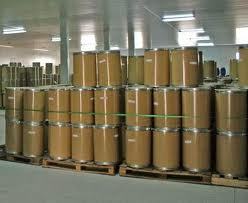
Butylparaben .
Price 1000.0 INR / Kilograms
Minimum Order Quantity : 25 Kilograms
Chemical Name : Butylparaben
Storage : Keep away from moisture
Molecular Formula : C11H14O3
Grade : cosmetic
Methyl Paraben
Price 350.0 INR / Kilograms
Minimum Order Quantity : 25 Kilograms
Chemical Name : Methyl Paraben
Storage : Room Temperature
Molecular Formula : C8H8O3
Grade : pharma grade
Sodium Butylparaben
Price 580.0 INR / Kilograms
Minimum Order Quantity : 25 Kilograms
Chemical Name : Sodium Butylparaben
Storage : Freezer
Molecular Formula : C11H13NaO3
Grade : Medicine Grade

Contact Us

- 311, Atlantis Heights, Sarabhai Main Road, Vadiwadi,Vadodara - 390007, Gujarat, India
- Phone :08045479576

-
 Send Inquiry
Mr. Nilesh Bansilal Sheth (Partner)
Mobile :08037400111
 : nilesh.sheth70
MR. Tushar V. Kavade (Partner) : tushar.kavade
 Send Inquiry
|


SHREEJI PHARMA INTERNATIONAL
All Rights Reserved.(Terms of Use)
Developed and Managed by Infocom Network Private Limited.
Developed and Managed by Infocom Network Private Limited.

